How Family Albums Became Places for Stories
Learn how family albums became places for stories by reading page order, captions, and layout as clues to how relatives shaped a shared family memory.
The common mistake with family albums is to read every page as a straightforward timeline. That can hide the album maker’s choices: which photographs earned a place, how prints were grouped, and what a caption was meant to identify. Family albums became places for stories partly because their physical layout invited relatives to connect images and add context.
What does a family album’s layout tell you?
An album turns separate photographs into a sequence. Its maker chose what to include, what to leave loose or unmounted, and which images to place beside each other. Those choices shape how a viewer reads the collection, even when no caption explains them.
Look for visible patterns before assigning a story to them. A page of studio portraits may show that formal photographs were grouped together; a run of pictures from different rooms may suggest an occasion or household. The layout itself tells you how the photographs were assembled, but not necessarily why the maker arranged them that way.
Think of an album like a bookshelf arranged by one reader: the order creates a path, but it does not explain every choice. Treat page order as a clue to the album’s construction, not as a complete account of the family’s past.
How do captions and page details shape meaning?
Captions can identify people, places, or events, but their usefulness depends on what they actually say and who could understand them. “Aunt May” may be clear to the original household and unclear to a later reader. A date, place name, or short phrase can narrow the possibilities without explaining the whole scene.
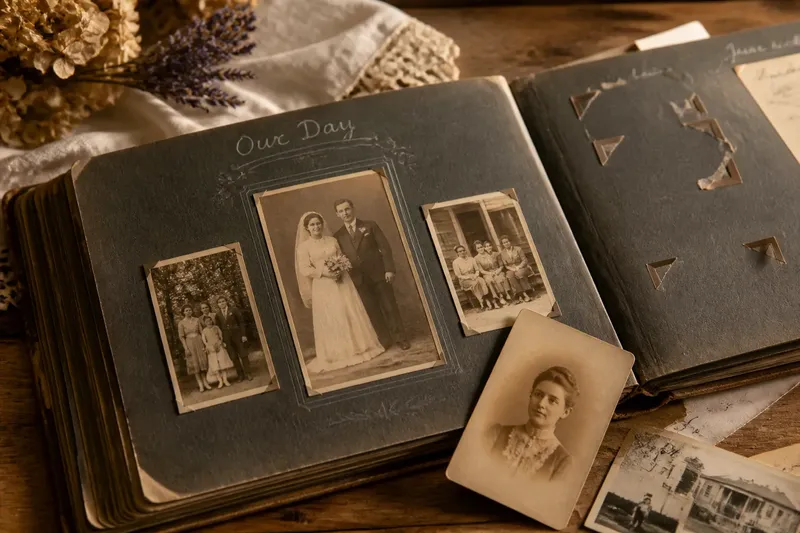
Notice how the caption relates to the photograph. Is it written directly below the image, on a facing page, or on a loose slip? Does the handwriting match nearby notes? Record what is visible, including blank spaces, pasted-over writing, cut edges, and empty corners where a print may have been removed. These details can reveal how the album changed without establishing the reason for each change.
Album-specific interpretation also means noticing design choices. Mount color, decorative borders, page titles, and the amount of space given to a photograph can affect its emphasis. A large portrait placed alone reads differently from a small snapshot tucked among several images, though the intended meaning may remain unknown.
How can you read an album without turning layout into a timeline?
Start with the page as it exists. Note the page number or position, the number and placement of photographs, visible captions, and any marks or alterations. Then describe the connection you think the arrangement suggests, using cautious wording such as “grouped together” or “possibly arranged by occasion.”
Keep visual observations distinct from interpretations. “Three portraits appear on the same page” is observable; “the family wanted to show three generations together” is an interpretation unless a caption or other source supports it. This distinction preserves the album’s design evidence while leaving room for more than one reading.
Say you find a page with a wedding portrait at the center, two smaller family photographs beside it, and the penciled heading “Our day.” You can record the heading and placements as visible details, then describe the page as emphasizing the wedding. You should not infer who selected the photographs or what each person felt unless another source says so.
What questions help explain an album’s design?
Why are these photographs placed together?
Ask what visual connection the page offers: shared setting, similar clothing, a repeated person, or a common caption. Record the apparent link as an interpretation rather than treating it as a confirmed event sequence.
Does the page order appear chronological?
Compare dates written on photographs with the order of the pages, if dates are present. If the sequence does not line up, describe the order you can see instead of forcing the album into a timeline.
What does an empty space or removed photograph suggest?
Note the shape, adhesive, or marks around the space and whether a caption remains. These clues can show that something was once attached, but they do not establish what the photograph showed or why it was removed.
Which design choices draw the eye?
Notice placement, size, borders, and page headings. Describe which image receives the most visual emphasis, while leaving the maker’s reason open unless the album records it.
How can you document the album’s arrangement?
Use a page-by-page log or a digital scan that includes the full page, not only cropped photographs. A simple log can include the following observations and decisions:
- Check whether the page number is visible; if it is, record it, and if it is not, assign a temporary position such as “third page after the cover.”
- Check how many photographs appear and where they sit; if placement forms a clear group, describe the group, and if no pattern is apparent, record the positions without inventing one.
- Check for captions and headings; if words are legible, transcribe them exactly, and if they are unclear, mark the uncertain letters rather than guessing.
- Check whether prints overlap, are loose, or appear to have been moved; if a change is visible, note the physical clue, and if none is visible, avoid claiming the arrangement is original.
- Check for blank mounts or adhesive traces; if present, record their location, and if absent, do not infer that a photograph was removed.
- Check whether a scan shows the entire page; if it does, retain it with the page log, and if it is cropped, make a full-page scan before relying on the image to interpret layout.
Imagine you are cataloging a small album with a loose portrait, two mounted snapshots, and a page heading. You note the page position, scan the full page, transcribe the heading, and record which prints are attached and which are loose. The resulting record preserves the visible arrangement while making clear that the loose portrait’s intended place is unknown.
For fragile or valuable albums, follow the holder’s handling guidance and seek advice from a qualified archivist or conservator before moving photographs or attempting repairs. Avoid writing on prints or altering the arrangement to make a page seem clearer.
How do family stories add context to album design?
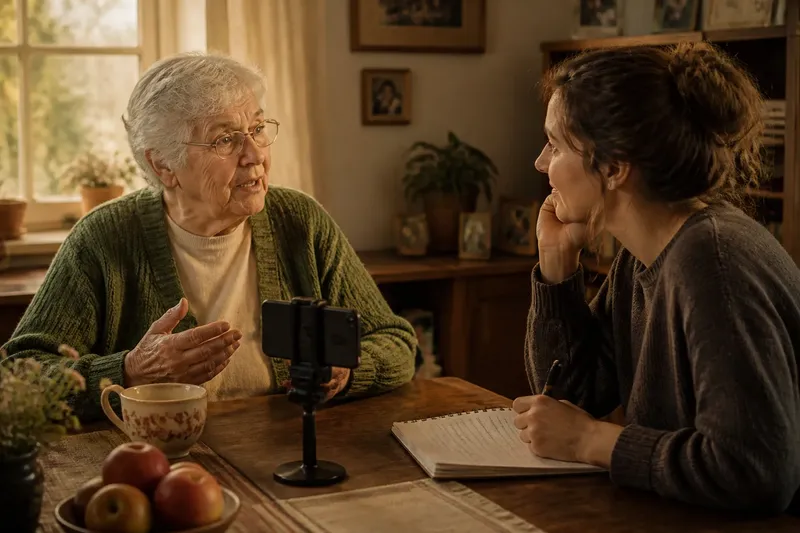
A relative may explain why a page was arranged a certain way, identify a theme, or point out a detail that a new viewer would miss. Record that explanation alongside the page reference, but keep it distinct from what the page itself shows. This makes it possible to understand both the album’s visible design and the later meaning relatives attached to it.
For family albums became places for stories in a lasting way, preserve both the page and the record of how people read it. A full-page scan, a careful description of layout, and a clearly attributed explanation give future viewers room to see the arrangement for themselves and understand why it mattered to someone in the family.