The Tradition Myth: A Repeated Custom Need Not Have One Origin
Family traditions change as people adapt them. Use this season-long plan to trace what shifted, why it mattered, and which parts your family wants to carry forward.
The common mistake with a family tradition is treating its oldest remembered version as the only authentic one. That can make later changes sound like errors instead of choices, and it can leave younger relatives feeling they must preserve a custom exactly as it was. To understand a tradition, trace not only where it may have begun, but how each generation has shaped it.
Family tradition changes are often small: a different dish joins the table, a gathering moves to another home, or a greeting becomes a playful ritual. Those shifts can show how a custom responds to people’s lives. A season-long plan can help your family notice those changes and decide what to carry forward without turning the past into a rulebook.
Why do family traditions change over time?
A custom can keep its name while its form changes. A holiday meal may move from one relative’s kitchen to a community hall; a song may gain a new verse; a birthday ritual may be adapted for relatives who live far away. The continuity lies partly in the shared purpose, not only in repeating every detail.
Try thinking of a tradition as a recipe card passed around a kitchen. Each cook may keep the dish recognizable while adjusting an ingredient, serving style, or occasion. The comparison is a prompt to look for change, not a claim that every alteration is welcome or harmless.
Ask what each version made possible. A change might have helped include a new family member, fit a different schedule, or respond to a loss. The reason may be known, remembered differently, or still unclear. Recording that distinction lets the story hold both continuity and change.
What should you choose to follow through the season?
Pick one recognizable custom with visible actions, such as a reunion greeting, a seasonal dish, or a birthday ritual. Avoid trying to document every family tradition at once. Write down what people do now before asking what they used to do; that gives you a clear starting point for noticing differences.
Before inviting relatives to talk, make a working note. For each item, record what you observe and decide what to do with the result:
- Current action: Check what people say or do at the next gathering; if the action is clear, describe it plainly, and if it varies, list the versions rather than choosing one.
- Occasion: Check when the custom happens; if it is tied to a particular event, include that setting, and if it happens informally, avoid assigning it a fixed date or occasion.
- Participants: Check who takes part now; if participation is open, say so, and if some relatives are absent or choose not to join, do not imply everyone participates.
- Known changes: Check whether anyone recalls a different place, object, or action; if a change is remembered, note who recalls it, and if no one does, mark the earlier version as unknown.
- Purpose or meaning: Check what participants say the custom means to them; if meanings differ, preserve those differences, and if nobody names a purpose, do not invent one.
- Sharing boundaries: Check what each person permits you to keep or share; if permission is limited, follow that limit, and if permission is unclear, leave the account out until you ask.
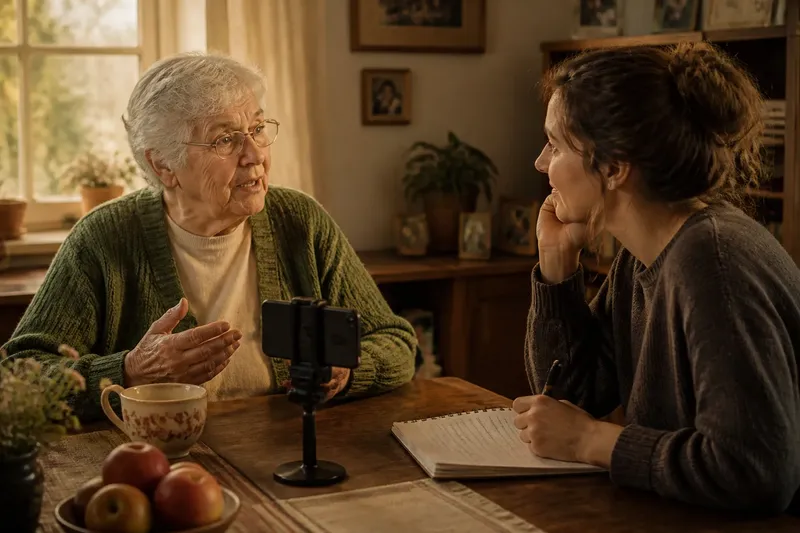
Ask relatives separately when possible. A group conversation can make it harder to mention a change that someone else dislikes. Explain that you are recording how the custom has been practiced, not deciding which version counts as the real one. Ask permission before recording, quoting, or sharing anyone’s account.
How can you trace changes without turning them into a contest?
Start with questions about the practice rather than a search for the person who “did it right.” Ask, “What did this look like when you first took part?” and “What changed later?” Then ask who made or noticed a change, what was happening at the time, and whether the custom’s meaning shifted with it.
Useful prompts include:
- “What part of the custom has stayed familiar to you?”
- “What is different now from the earliest version you remember?”
- “Did the change happen all at once, or gradually?”
- “What made the new version easier or more meaningful for someone?”
- “Is there a part you would like the family to keep, change, or let go?”
Keep questions open. If a relative says, “We used to gather at Grandma’s,” ask what they recall about the move to another home rather than assuming it was a loss or a convenience. One person may welcome a change that another misses. You can record both reactions without asking the family to vote on a single feeling.
What should you record about each version?
For each account, note the speaker’s relationship to the custom, the version they describe, and what they say changed. Keep the focus on the custom’s evolution rather than collecting a polished origin story.
- The action or form the person remembers.
- The occasion and people involved, if they recall them.
- The change they noticed and, if known, when or why it happened.
- What they hope will continue, and what they would be comfortable changing.
- Any uncertainty or difference between their account and another person’s.
- What they permit you to quote, keep, or share.
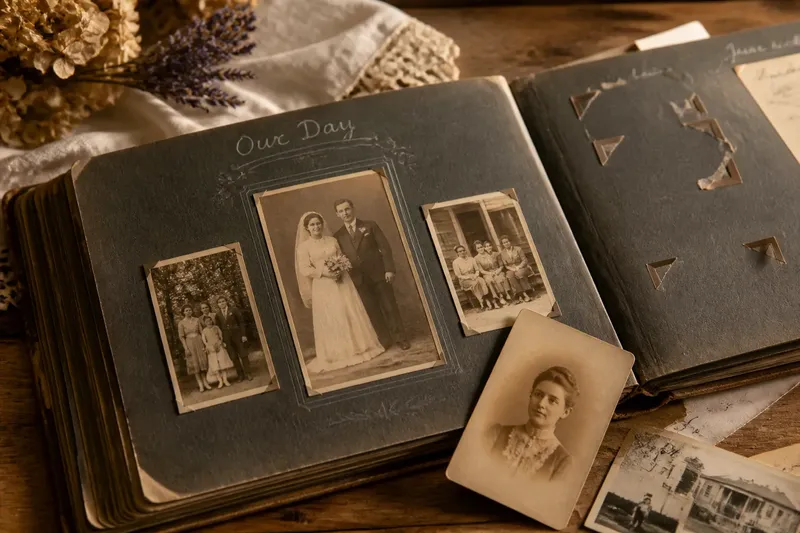
Use a dated invitation, recipe card, program, or family calendar to place a version in context only when its connection is clear. An item may show that a custom took a particular form at a particular occasion; it does not explain what participants felt about that version. Record what the material supports, then keep personal interpretations distinct from it.
How can a season-long plan show what changed?
Give the work enough room for separate memories and a return visit to the custom. The timing below is a suggested rhythm, not a deadline for producing a settled family account.
- Week one: Describe the current custom. Write down its visible actions, setting, and participants. If the practice varies, record the variations instead of selecting a standard version.
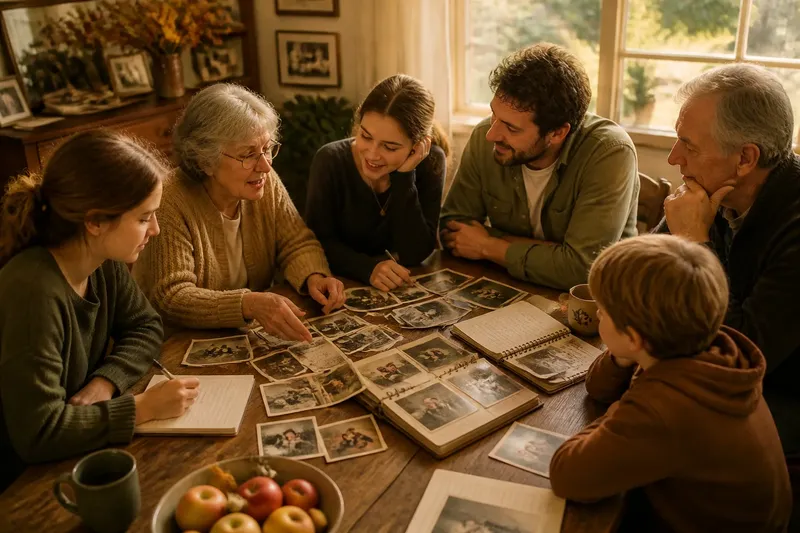
- Weeks two and three: Invite separate accounts. Ask relatives from different generations what they remember changing and what stayed familiar. Ask permission before recording or keeping their words.
- Week four: Make a change map. Use three columns: “earlier version,” “change or addition,” and “what someone says it meant.” Put a claim in the last column only if a relative actually expressed that meaning.
- Weeks five and six: Check the context. Look at relevant family materials or ask another participant about a specific change. If the date or connection of an item is unclear, do not use it to place the change in time.
- Week seven: Draft the evolving account. Describe the current custom, then set out the versions people remember in order where possible. Mark uncertain timing and differing meanings rather than smoothing them into one explanation.
- Week eight: Share and revise. Ask the people whose accounts appear whether their words and sharing permissions are represented accurately. Correct errors, remove material they do not want shared, and preserve disagreements about what a change meant.
If someone is unavailable or the custom touches a painful family matter, pause instead of pressing for an answer. A record can be useful even if it describes only the versions and changes people are comfortable discussing.
How should you write about a tradition that keeps evolving?
Imagine your family holds a spring meal. For this invented example, start with a current gathering where relatives bring dishes to a shared table. One person remembers that the meal used to take place at a grandparent’s home, while another recalls that the move to a park made it easier for more relatives to join. You write that the location changed, identify each person’s view of the change, and leave the reason open if no one can establish it. The result is a short account that describes both the practice and the different meanings attached to its evolution.
Use wording that makes change visible: “The gathering began at a relative’s home, according to one person’s recollection; later accounts describe it outdoors, where some relatives felt more people could take part.” If the timing is uncertain, say so. Avoid calling one version the original or proper form unless people themselves use those words and you explain whose view that is.
When relatives disagree, describe the disagreement without turning it into a contest. One person may value a familiar setting, while another may value the broader participation a new setting allows. If the difference concerns private or painful information, share only what you have permission to include.
What do families ask about tradition changes?
Does changing a tradition mean the family has lost it?
Not necessarily. A custom may retain its shared purpose while its place, participants, or form changes. Ask what people recognize as continuous before deciding that a change erased the tradition.
How can you include a new version without erasing the old one?
Describe both versions and note who remembers or prefers each. If the family keeps old materials, preserve them alongside the newer account rather than replacing them with a single updated description.
What if relatives disagree about why a change happened?
Attribute each explanation to the person who offered it and leave the reason unresolved if accounts differ. You can still describe the observable change without choosing a motive for the family.
How do you involve children in a changing custom?
Explain what the family does now and mention one earlier version in simple language. Invite children to suggest a change that would help them take part, then discuss together whether the family wants to adopt it.
How can you pass a changing tradition on?
Keep the account with materials your family already uses, such as a shared notebook or a folder of agreed-upon records. Add a short note that describes the current form, earlier versions people remember, and any open questions. If the practice changes again, add a dated entry with permission rather than silently rewriting the record.
When you talk about family tradition changes later, present them as part of the custom’s continuing story. Name what people want to preserve, what they have adapted, and what remains unsettled. That gives future relatives room to understand the choices behind the tradition and make their own thoughtful decisions about what comes next.
Before the next gathering, ask participants one practical question: what should stay recognizable this time, and what can flex to include the people who are here? Their answers can help the tradition remain shared without requiring every generation to repeat the same details.