The One-Sentence Anchor That Keeps a Memory in Focus
A one-sentence anchor for a family memory gives listeners a clear thread while preserving the small details that make the recollection feel true.

The common mistake in telling a family memory is starting too far back: a long chain of names, places, and explanations before listeners know what to hold on to. A one-sentence anchor for a family memory gives them that thread early, so the important details have somewhere to land.
The anchor is not a summary of everything that happened. It names the central moment you want the listener to carry away. The recollection can still wander through its sights, sounds, and side notes; the sentence simply gives it a center.
What moment should the story turn around?
Say you are preparing to tell a younger relative about a family picnic that ended with your uncle rescuing a paper kite from a tree. You remember the drive, the sandwiches, a sudden gust, someone laughing, and the walk home. If you begin with every detail in order, the listener may not know which part matters most.
Before telling it, choose the moment that changed the scene. In this invented situation, your anchor might be: “The picnic became memorable when Uncle Ray climbed the low branch to free the kite we had just made.” That sentence gives the account a destination without deciding what every detail must mean.
Keep the sentence concrete. A useful anchor usually includes a person or object, an action, and the moment that makes the memory worth retelling. “We had a lovely picnic” is too broad to guide the story. “The kite snagged just as the wind lifted our blanket” gives the listener something to picture and invites the next part.
How do you keep the anchor from flattening the memory?
Think of the anchor as a coat hook by the door: it gives the story a place to hang, but it does not replace the things you bring inside. The kite, the cold lemonade, and your uncle’s nervous glance can all remain. They simply connect to a scene the listener can follow.
After naming the anchor, add details that clarify the moment, reveal the people in it, or help the listener feel its texture. A detail does not have to advance the action like a plot point. Your aunt’s careful folding of the blanket may show how she handled the family’s sudden scramble; the smell of wet grass may make the afternoon vivid.
Try asking yourself what each detail does. If it sharpens the scene or shows why you remember it, keep it. If it opens a separate story that would need its own setup, save it for another telling or mention it briefly. This is editing for a clear thread, not trimming away everything that is not essential to the event.
How can the listener follow the story without extra background?
Once you have the anchor, build the telling around it in a few natural turns: set the scene, bring the listener to the central moment, then show what happened afterward. You do not need to announce these parts. A sentence about the picnic spot can lead into the wind; the snagged kite brings the anchor into view; the walk home can show what the family did with the mishap.
Offer only the background a listener needs to understand the moment. If Uncle Ray is unfamiliar to the younger relative, a short phrase such as “my older brother, who always volunteered for awkward jobs” may be enough. Avoid pausing to explain every relationship or old disagreement unless it changes what the listener understands about the scene.
In the invented picnic story, the result is not a polished legend about a fearless uncle. It is a memory with room for affection and imperfection: he climbed only as high as he felt safe, the kite came free, and someone had to brush leaves from his sleeve. The anchor keeps those details together without insisting that the afternoon prove anything about him.
What questions help shape a family memory?
Can the anchor be a feeling instead of an event?
Yes, if the feeling is tied to a specific moment. “I felt included when my cousins saved me a place on the blanket” points toward a scene, while “I was happy that summer” leaves the listener without one.
What if two people remember the central moment differently?
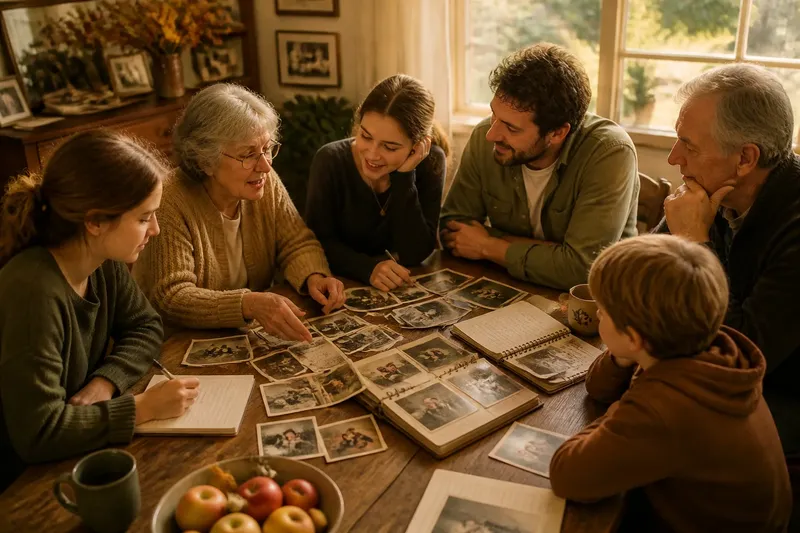
Let each person name the moment they carry away, and keep the difference visible in the telling. One relative may remember the kite rescue; another may remember the group deciding to walk home together.
Should the anchor appear at the beginning?
Often, stating it early helps listeners recognize where the story is headed. You can also begin with a brief sensory detail, then give the anchor before the background grows long.
Can a story have more than one anchor?
A longer recollection may contain several meaningful scenes, but one telling is usually easier to follow when it centers on one. If another scene deserves equal space, treat it as a separate memory or make the relationship between the scenes clear.
How can you use the anchor when recording a story?
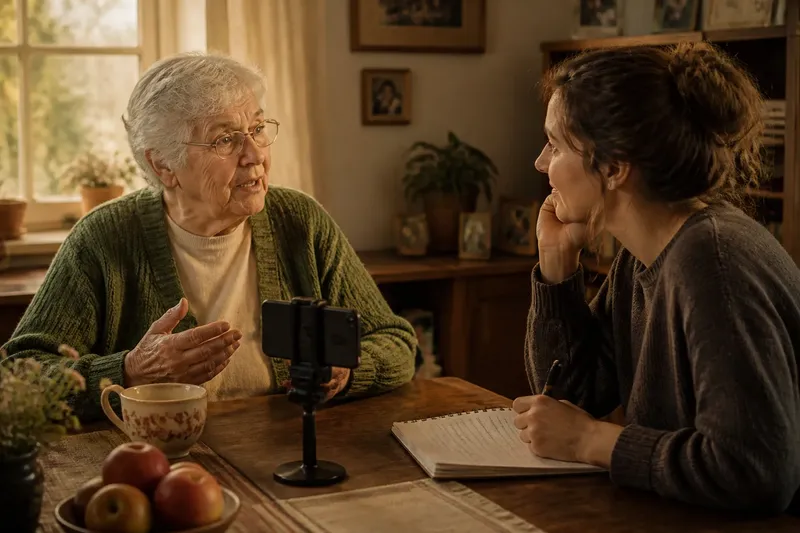
Write the anchor at the top of a page or on a card before you begin telling the memory. Beneath it, jot a few cues rather than a full script: where you were, what changed, one detail you can still see or hear, and what happened next. These notes can help you return to the central moment if the account starts to drift.
If a listener asks about a side detail, answer naturally, then use a small bridge back: “That was earlier in the afternoon; the part I remember most clearly came when the kite caught.” The phrase is not a command to stay on topic. It gives both of you a way back to the moment you chose.
For the picnic recollection, the one-sentence anchor would not preserve every word anyone said or settle exactly how high Uncle Ray climbed. It would preserve the scene the storyteller wants to share, while leaving room for another relative’s version. A one-sentence anchor for a family memory works best as a starting point, not a verdict: it helps listeners find the thread, then lets the living details make the story their own.